Natural vs. Lab-Grown Diamonds: What Should Jewelry Stores Know in 2027?


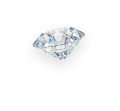


The diamond market is changing, and jewelry stores are increasingly finding themselves selling two distinct categories of diamonds to customers with different priorities.
Natural diamonds continue to appeal to customers who value their geological origin, rarity, and tradition. Meanwhile, lab-grown diamonds have made larger carat weights and higher color and clarity grades accessible at significantly lower prices.
For jewelry retailers, the question is no longer simply whether to offer natural or lab-grown diamonds. It's how to position both categories, manage inventory, and make purchasing decisions that reflect what customers actually want.
According to Jewel360's 2026 Jewelry Industry Report, 85% of surveyed jewelry stores carry both natural and lab-grown diamonds, while three-quarters of surveyed bridal stores expect lab-grown diamonds to account for more than half of their engagement ring sales in 2026.
As the industry approaches 2027, understanding the differences between these two markets is becoming increasingly important.
What Is the Difference Between Natural and Lab-Grown Diamonds?
Natural diamonds form deep within the Earth over geological timescales, while lab-grown diamonds are produced in controlled environments using technological processes.
Despite their different origins, both are diamonds.
According to the Gemological Institute of America (GIA), natural and lab-grown diamonds have essentially the same chemical composition, crystal structure, and optical properties.
The main differences are how they are formed, their availability, their pricing, and how customers perceive their value.
Natural diamonds are generally considerably more expensive than comparable lab-grown diamonds because of differences in supply, production, and market positioning.
Lab-grown diamonds offer customers the opportunity to purchase larger or higher-graded stones at lower prices.
For jewelry stores, understanding these differences is essential when presenting options and helping customers decide which type of diamond best suits their priorities.
Are Lab-Grown Diamonds Becoming More Popular Than Natural Diamonds?
Lab-grown diamonds have gained significant ground in the jewelry market, particularly in engagement rings.
Jewel360's 2026 research found that 66% of surveyed bridal retailers already generated at least half of their engagement ring sales from lab-grown diamonds, while a further group expected to reach that point during the year.
Recent sales data also indicates continued growth in the category.
According to Tenoris data reported by JCK, demand for lab-grown diamond jewelry at U.S. specialty jewelers increased by approximately 26% year over year in September 2026.
However, greater demand doesn't necessarily translate into higher revenue or profitability.
The same report found that revenue from loose lab-grown diamonds continued to decline despite stronger unit demand, reflecting ongoing pressure on prices.
Natural diamonds, meanwhile, continue to attract customers looking for rarity, traditional luxury, and particular characteristics associated with naturally formed stones.
For jewelry stores, these developments suggest that both categories have a place in the market, but they require different approaches to pricing, inventory, and customer conversations.
How Are Natural and Lab-Grown Diamond Prices Changing?
Pricing is one of the most significant differences between the natural and lab-grown diamond markets.
According to UNI Market Insights, both natural and lab-grown diamond prices declined between November 2025 and November 2026, although the rate of decline differed considerably.
During this period, natural diamond prices fell by 12.15%, while lab-grown diamond prices declined by 22.08%.
These figures highlight the importance of understanding how different diamond categories are performing rather than assuming that all diamond prices move in the same direction.
Natural Diamond Prices
Natural diamond prices are influenced by several factors, including carat weight, cut, color, clarity, market demand, and available supply.
While the overall market recorded a 12.15% decline over the past 12 months, prices can vary considerably between different diamond categories.
For example, a 1-carat round diamond and a 3-carat oval diamond may experience different pricing trends because they serve different customer preferences and have different supply dynamics.
This makes it important for jewelry stores to evaluate specific diamond categories rather than relying exclusively on general market headlines.
Lab-Grown Diamond Prices
Lab-grown diamonds have experienced substantial price declines over recent years as production capacity and manufacturing efficiency have increased.
Between November 2025 and November 2026, lab-grown prices fell by 22.08%, a considerably larger decline than the 12.15% recorded for natural diamonds.
The data also shows that lab-grown diamonds are priced approximately 87% lower than comparable natural diamonds, illustrating the significant price difference between the two categories.
For example, November 2026 pricing data shows that a 1.00-carat round natural diamond with F color and VS1 clarity was priced at $3,168, while a lab-grown diamond with the same specifications was priced at just $94.
In this specific comparison, the lab-grown diamond was approximately 97% less expensive than its natural counterpart.
The 87% figure represents the broader market comparison, while the 97% difference applies to this particular diamond category.
These figures illustrate how significantly prices can differ even when diamonds share the same basic grading characteristics.
For jewelry stores, lower lab-grown diamond prices can create opportunities to offer customers larger stones within their budgets. However, declining prices can also present challenges for retailers holding inventory purchased at earlier, higher costs.
A diamond that was competitively priced when purchased may become less attractive if replacement costs and retail prices subsequently decline.
Monitoring current market prices is therefore important when making purchasing and pricing decisions.
Should Jewelry Stores Stock Natural Diamonds, Lab-Grown Diamonds, or Both?
For many jewelry stores, offering both natural and lab-grown diamonds can be a practical approach.
Customers have different preferences, budgets, and reasons for purchasing diamonds.
Some prioritize natural origin and rarity, while others focus on maximizing carat weight or visual appearance within a particular budget.
Offering both categories allows retailers to serve a wider range of customers without assuming that one type of diamond will suit everyone.
However, offering both doesn't necessarily mean holding large quantities of each in physical inventory.
A jewelry store might keep a selection of popular natural and lab-grown diamonds available for immediate viewing while ordering less common sizes, shapes, or specifications when customers request them.
This approach can help reduce the amount of capital tied up in inventory while maintaining a broad selection.
Through UNI's diamond marketplace for jewelry stores, retailers can access millions of natural and lab-grown diamonds without purchasing every option upfront.
How Can Jewelry Stores Protect Their Margins?
Selling natural and lab-grown diamonds requires careful attention to purchasing costs and retail pricing.
With lab-grown diamond prices declining by more than 22% over the past 12 months, retailers holding older inventory may face challenges maintaining competitive pricing.
For natural diamonds, variations in demand, availability, and diamond characteristics can influence the prices retailers pay.
To protect profitability, jewelry stores should consider several factors.
Monitor replacement costs: Evaluate how much it would cost to purchase a comparable diamond today, rather than relying exclusively on the original purchase price.
Review inventory regularly: Identify diamonds that have remained unsold for extended periods and assess whether their pricing is still competitive.
Compare similar diamonds: When evaluating prices, compare diamonds with closely matching specifications, grading information, and other relevant characteristics.
Track customer demand: Understand which shapes, sizes, and price points customers are actually purchasing.
Avoid unnecessary inventory commitments: Consider ordering specific diamonds when customers request them, particularly in categories where prices are changing rapidly.
Retailers can also use UNI Market Insights to analyze price trends, supply changes, and inventory performance, helping them make purchasing decisions based on current market conditions.
The goal isn't necessarily to carry fewer diamonds. It's to make sure the diamonds a store purchases are aligned with customer demand and realistic selling opportunities.
How Should Jewelers Present Natural and Lab-Grown Diamonds to Customers?
One of the most important responsibilities of a jeweler is helping customers understand what they're purchasing.
Both natural and lab-grown diamonds can offer excellent appearance and quality, but they represent different purchasing choices.
Rather than positioning one as universally better, jewelry stores can explain the differences and allow customers to decide which characteristics matter most to them.
For example, a customer with a fixed budget may be able to purchase a larger lab-grown diamond than a comparable natural diamond.
Another customer may prefer a smaller natural diamond because its geological origin and rarity are important to them.
Clear communication is particularly important when discussing origin.
The Federal Trade Commission's jewelry advertising guidance requires appropriate disclosure when diamonds are laboratory-created, helping prevent consumers from mistakenly believing they are mined diamonds.
Jewelry stores should also explain the relevant grading documentation and ensure customers understand the characteristics of the diamond they choose.
In 2025, GIA announced a revised approach to evaluating lab-grown diamonds, using the classifications Premium and Standard rather than the traditional natural-diamond grading terminology for eligible stones.
For retailers, keeping up with changes in grading practices and product terminology helps ensure that customer conversations remain accurate and transparent.
What Should Jewelry Stores Expect From the Diamond Market in 2027?
While the precise direction of diamond prices and consumer demand in 2027 remains uncertain, several developments are worth monitoring.
Lab-grown diamonds are now an established part of jewelry retail. Retailers need to understand how customers perceive the category and how changes in pricing affect purchasing decisions.
Natural diamonds continue to serve a distinct market. Customers who prioritize natural origin, rarity, and traditional luxury remain an important audience.
Inventory decisions are becoming more important. As market conditions evolve, retailers need to understand which diamonds are selling and which may remain in inventory.
Customers expect transparency. Clear explanations of diamond origin, grading, and pricing can help jewelers build trust.
Market data can support purchasing decisions. Tracking price trends and supply changes helps retailers respond to changes rather than relying entirely on historical assumptions.
For jewelry stores, success in 2027 may depend less on choosing one diamond category over the other and more on understanding how each fits into the business.
How UNI Helps Jewelry Stores Navigate the Natural and Lab-Grown Diamond Markets
As customer preferences and diamond prices continue to evolve, jewelry stores need access to both a wide selection of diamonds and reliable market information.
UNI Diamonds brings together more than 2.5 million natural and lab-grown diamonds from over 500 suppliers worldwide, giving retailers the flexibility to offer customers more options without purchasing additional inventory upfront.
Through UNI, jewelry stores can:
- Compare natural and lab-grown diamonds: Explore millions of available stones across different shapes, sizes, and quality characteristics.
- Monitor market pricing: Use UNI Market Insights to follow price trends, supply changes, and diamond market conditions.
- Offer diamonds without holding additional inventory: Order diamonds when customers need them, with memo options available on eligible stones.
- Sell diamonds in-store: Use Facet to present natural and lab-grown diamonds through a fully branded in-store experience.
- Expand online selection: Offer live diamond inventory through Shopify or API integrations.
- Get diamonds quickly: Benefit from FREE overnight delivery in the United States on eligible orders.
By combining broad diamond availability with market data and digital selling tools, UNI helps jewelry stores respond to changing customer demand while managing inventory more efficiently.
The Bottom Line: Natural and Lab-Grown Diamonds in 2027
Natural and lab-grown diamonds are no longer competing simply on appearance or price.
They appeal to customers with different preferences, purchasing motivations, and budgets.
For jewelry stores, the opportunity is to understand both categories, offer customers the right options, and make informed decisions about what to buy, stock, and sell.
As the market continues to evolve, retailers that combine customer expertise with access to live diamond inventory and current market information will be better positioned to adapt.
Find the Right Diamonds for Every Customer
Leave your details and see UNI in action!
 Search Registrant Register List - Dealers in Precious Metals and Stones Registration System